Assessment of Advanced Non Volatile Memories
Programme Reference
T723-603ED
Status
Closed
Country
Germany
Start Date
2020
End Date
2024
Programme: TDE Prime Contractor: Engineering Minds Munich GmbH
Subcontractors:
NaMLab • Germany
Objectives
To characterize the most innovative novel European technology enabling high density and radiation-hard, Non-Volatile Memory for space applications;
Description
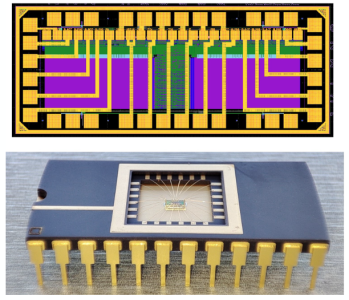
As of today, there is a strong need for a next generation non-volatile re-programmable memory technology for space missions, with a broad range of applications ranging from FPGA companion dies to mass memory units. Current solutions commonly used are either not intrinsically radiation hard, low density or non-European.;Within the European industrial landscape, promising, novel Non-Volatile Memory (NVM) technologies are found to be currently under research and development. Examples include solutions such as new Magneto-resistive RAM (MRAM), memory based on Ferroelectric Transistors (FeFET), Phase-Change Memory (PCM) and Resistive RAM?s (RRAM). Although mainly being developed with terrestrial applications in mind, some technologies have the potential for enabling space products that successfully address and overcome certain issues of existing solutions. ;;To pave the way for the future development of a new European NVM product, this activity aims to evaluate the most innovative solution and gain first insight from a space user perspective into this novel technology. It shall look into the potential of the selected memory type with respect to key parameters such as radiation hardness, memory density, power consumption and switching speed, and into reliability aspects, such as temperature stability, data retention, cycling and lifetime.;This activity encompasses the following tasks:- Trade-off of potential technologies and selection of most innovative and promising technology with regard to current and future needs of space applications. The decision shall take the memory cells as well as the choice of the best baseline manufacturing technology into account.- Test chip design based on current existing and functional memory IP blocks- Wafer manufacturing (MPW)- Packaging- Full electrical test on component level, including basic reliability testing- Radiation testing- Way forward
• Application domain: GEN-Generic Technologies
•
Technology Domain:
23-Electrical, Electronic and Electro-mechanical (EEE) Components and Quality
23-Electrical, Electronic and Electro-mechanical (EEE) Components and Quality
•
Competence Domain:
1-EEE Components, Photonics, MEMS
1-EEE Components, Photonics, MEMS
• Initial TRL: TRL 1
• Target TRL: TRL 3
• Achieved TRL: TRL 3
•HarmoRoadMap: Microelectronics - ASIC & FPGA (2016.1)
•IPC Document: ESA/IPC(2020)3
•Public Document: